


Testosterone Pellets For Low Testosterone In Adult Men
Testosterone pellets are a long-acting form of TRT for men with diagnosed low testosterone. Learn how they work, the risks, and how to start an evaluation.
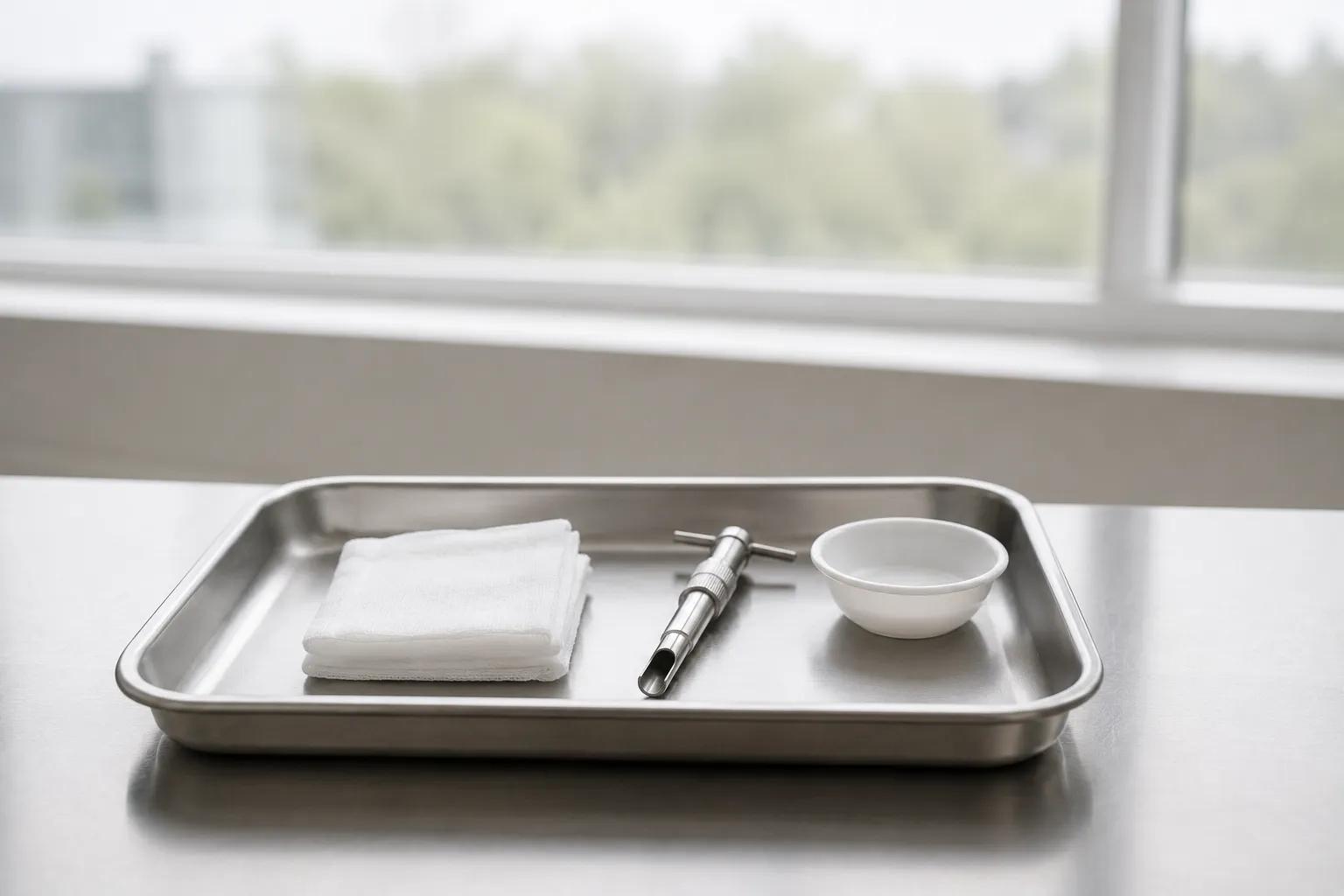
Testosterone pellets are small implants, each about the size of a grain of rice, that a clinician places under the skin to release testosterone gradually over several months. They are used to treat diagnosed low testosterone in adult men, a condition doctors call hypogonadism. The branded version, Testopel, holds FDA approval for replacement therapy in men with diagnosed hypogonadism (TESTOPEL prescribing information).
Pellets are one delivery method among several the wider testosterone-therapy landscape. Men comparing routes can review the wider picture of telehealth hormone care and see how pellets sit next to testosterone replacement therapy by injection or gel before deciding with a provider. Not every clinic offers every delivery method, so a man should confirm which options a given provider actually prescribes.


What are testosterone pellets?
Testosterone pellets are crystalline testosterone pressed into small cylinders, roughly 3 mm wide and 9 mm long, and placed under the skin of the hip or upper buttock. Once implanted, they dissolve slowly and release the hormone over several months. Absorption is not flat: much of the hormone is absorbed early, then the rate slows, so levels tend to run higher near the start of the cycle and lower near the end.
The number of pellets and the dosing schedule are set by a provider for each man, then placed during a periodic visit (TESTOPEL prescribing information). Much of the hormone absorbs early, then the rate slows, so levels tend to run higher near the start of the cycle and lower near the end.
Testosterone is the main male sex hormone, made mostly in the testicles. When the body cannot make enough, replacement therapy aims to move levels toward a healthy level for that individual, as guidelines describe (Endocrine Society).
Who is a candidate for testosterone pellet therapy?
Pellets are for men with a diagnosed deficiency, not for men simply hoping to feel younger or train harder. Confirming a deficiency takes two parts: lab results and symptoms.
Guidelines call for confirming low testosterone with repeat morning bloodwork interpreted by a clinician alongside symptoms, not a single result (Mulhall et al., 2018). Symptoms may include reduced sex drive and other sexual health concerns, fatigue, low mood, reduced muscle, or poor concentration. These are common and nonspecific, so they point toward an evaluation rather than a diagnosis on their own.
Low testosterone becomes more common with age, and is seen more often in men with obesity or type 2 diabetes (Endocrine Society).
One point gets missed often. The FDA approves testosterone, pellets included, only for hypogonadism caused by a medical condition. It is not approved for the natural decline that comes with age, and as of the February 2025 labeling that age-related limitation remained in place (FDA, 2025).
Before starting, a man should tell his provider about conditions such as a history of prostate or breast cancer, heart, kidney, liver, or lung disease, or any past reaction to testosterone, among other conditions. Pellets are placed by a clinician only after that review and lab confirmation.
How are testosterone pellets implanted?
The implant visit is typically short and done in an office. A clinician numbs a small area of skin over the hip or upper buttock, makes a tiny opening, and uses a device called a trocar to set the pellets in the fatty layer below the skin. The opening is closed with a small strip or a single stitch. No hormone is handled or stored at home.
The number of pellets is set by the provider, and the implant is repeated periodically (TESTOPEL prescribing information). Because the effect fades over time, timing the next visit matters. Levels typically decline as the pellets dissolve, and there is no at-home dose to take, so the schedule is the treatment.
Pellets carry one real trade-off. Once placed, the dose generally cannot be adjusted until the pellets dissolve. The Testopel label notes that pellet implantation is far less flexible for adjusting the dose than injections (TESTOPEL prescribing information). For men still establishing the right dose, this limited adjustability is an important point to weigh with a provider.
Testosterone pellets vs injections and gels
No single delivery method wins for everyone. The right one depends on how often a man wants treatment, how much control he wants over the dose, and his appetite for a minor procedure.
| Delivery method | How it is given | Typical cadence | Dose adjustment | Notes |
|---|---|---|---|---|
| Pellets | Implanted under the skin by a clinician | Every few months | Hard to change once placed | Long-acting release; levels run higher early and lower late; minor procedure with extrusion and infection risk |
| Injection | Intramuscular or subcutaneous | Weekly or biweekly | Easy to change | Self or in-office; levels peak then trough between doses |
| Transdermal gel | Applied to the skin | Daily | Easy to change | Simple, but can transfer to partners or children by skin contact |
Pellets suit men who travel, dislike needles, or forget daily doses, but they cannot be adjusted once placed. Injections allow frequent dose adjustments, though levels rise and fall between shots. Gels are simple, though the labels warn directly about transfer to others through skin contact. Men sorting through TRT options usually weigh convenience against control. The best route is a decision a man makes with his provider, based on which methods that provider offers, not a default.
Side effects and risks of testosterone pellets
Testosterone therapy carries real risks worth understanding before starting. A large trial of more than 5,000 men with low testosterone and heart risk found testosterone was not associated with more major cardiac events than placebo, though the testosterone group showed higher rates of atrial fibrillation, pulmonary embolism, and acute kidney injury (Lincoff et al., 2023). On those results, the FDA removed the older boxed cardiovascular warning in February 2025 and added a warning about increased blood pressure instead (FDA, 2025).
The day-to-day risks come mostly from levels running too high. Too much testosterone can affect the blood and other measures, which is why ongoing lab monitoring is part of care. Other possible effects may include acne, fluid retention, mood changes, breast tissue changes, and worsening of sleep apnea that can add to disrupted sleep.
Pellets add their own local risks. The implant can work its way back out of the skin (extrusion) or the site can become infected. Both are typically uncommon and are managed in routine medical care.
Testosterone therapy can also lower sperm production. The effect varies between men and is not guaranteed to return to baseline, so a man who wants children should raise fertility with a provider before starting. Men with existing cardiovascular health concerns need a careful review first as well.
Testosterone is a Schedule III controlled substance and is banned by most sports organizations. Medical replacement for a diagnosed deficiency is a separate matter from non-medical use for performance, and the two should not be blurred together.

Monitoring and follow-up on pellet therapy
Pellet therapy is not set-and-forget. A provider rechecks bloodwork periodically, then adjusts the next dose based on the results and how a man feels.
There is no single dose or retest date that fits every man. The plan depends on his labs and provider evaluation, not a fixed formula a client sets for himself.
FDA-approved versus compounded testosterone pellets
Testopel, the branded testosterone pellet, is FDA-approved for replacement therapy in men with primary or hypogonadotropic hypogonadism (TESTOPEL prescribing information). Compounded testosterone pellets are a different product. They are not FDA-approved, and no compounded pellet should be described as the same as the branded one.
Research comparing the two is thin. One 2023 single-center randomized trial set a compounded pellet against Testopel and found similar results and side effects, though it studied a single site's patients rather than a broad population (Kresch et al., 2023).
How men typically start testosterone pellet therapy
Access starts with an evaluation, not a checkout cart. A licensed clinician reviews symptoms and lab results, confirms a deficiency, and prescribes only when it is medically appropriate. A prescription is required after that evaluation, and delivery methods vary by provider, so a man should confirm what a given clinic offers.
Federal rules currently allow some controlled substances, testosterone included, to be prescribed by telemedicine without a prior in-person visit. That flexibility runs through December 31, 2026, it may change, and state law varies (DEA, 2025).
Because the implant is placed in person, remote care can only cover the parts that can be done remotely, such as the evaluation, lab work, and prescribing where appropriate. The insertion itself is a separate in-person procedure performed by a clinician who places the pellets. Used correctly and under monitoring, testosterone pellets are one option for a diagnosed deficiency, but they remain a medical decision built on lab confirmation and provider judgment, not a shortcut, and a man should confirm which delivery methods his provider actually prescribes.
Disclaimer: This blog post is intended for informational purposes only and should not be considered medical advice. Always consult a healthcare professional before making changes to your health routine.
FAQs
How long do testosterone pellets last?
A course of testosterone pellets usually lasts several months before reimplantation, with much of the hormone absorbed early. Levels tend to run higher at the start of the cycle and taper toward the end.
Are testosterone pellets better than injections?
Neither is better for every man. Pellets need a periodic clinician visit and cannot easily be adjusted once placed, while injections allow dose changes but cause more peaks and dips. The choice depends on a man's preferences and a provider's evaluation.
Are testosterone pellets FDA-approved?
Testopel, the branded testosterone pellet, is FDA-approved for men with diagnosed hypogonadism. Compounded testosterone pellets are not FDA-approved and should not be treated as the same as the branded product.
What are the main risks of testosterone pellets?
Risks can include effects on the blood, higher blood pressure, and pellet-site issues like extrusion or infection. A large trial also found higher rates of atrial fibrillation and pulmonary embolism in men on testosterone than on placebo.
Can testosterone pellets be removed?
Removal is difficult once pellets are placed, since they sit under the skin and dissolve over months. The dose generally cannot be adjusted until the pellets dissolve, which is a trade-off compared with daily gels or regular injections.
Is testosterone approved for age-related low testosterone?
No. The FDA approves testosterone only for hypogonadism from a medical condition, not for the natural decline of aging. As of the February 2025 labeling, that age-related limitation remained in place.
How does a man start testosterone pellet therapy?
It starts with an evaluation by a licensed clinician, including repeat morning bloodwork reviewed alongside symptoms. A prescription is required after that evaluation, and access by telemedicine depends on current federal and state rules.
References
More from Marek Health




Your biology has answers.
Custom labs, a dedicated care team, and treatment built on your biology, not guesswork. One program, built around you.
HIPAA compliant · We never sell your data