


Does TRT Change Your Face? Science Behind the Changes
TRT can change facial appearance through fat redistribution, skin thickness, and beard growth, but not bone structure. Learn the timeline, expectations, and safety data.
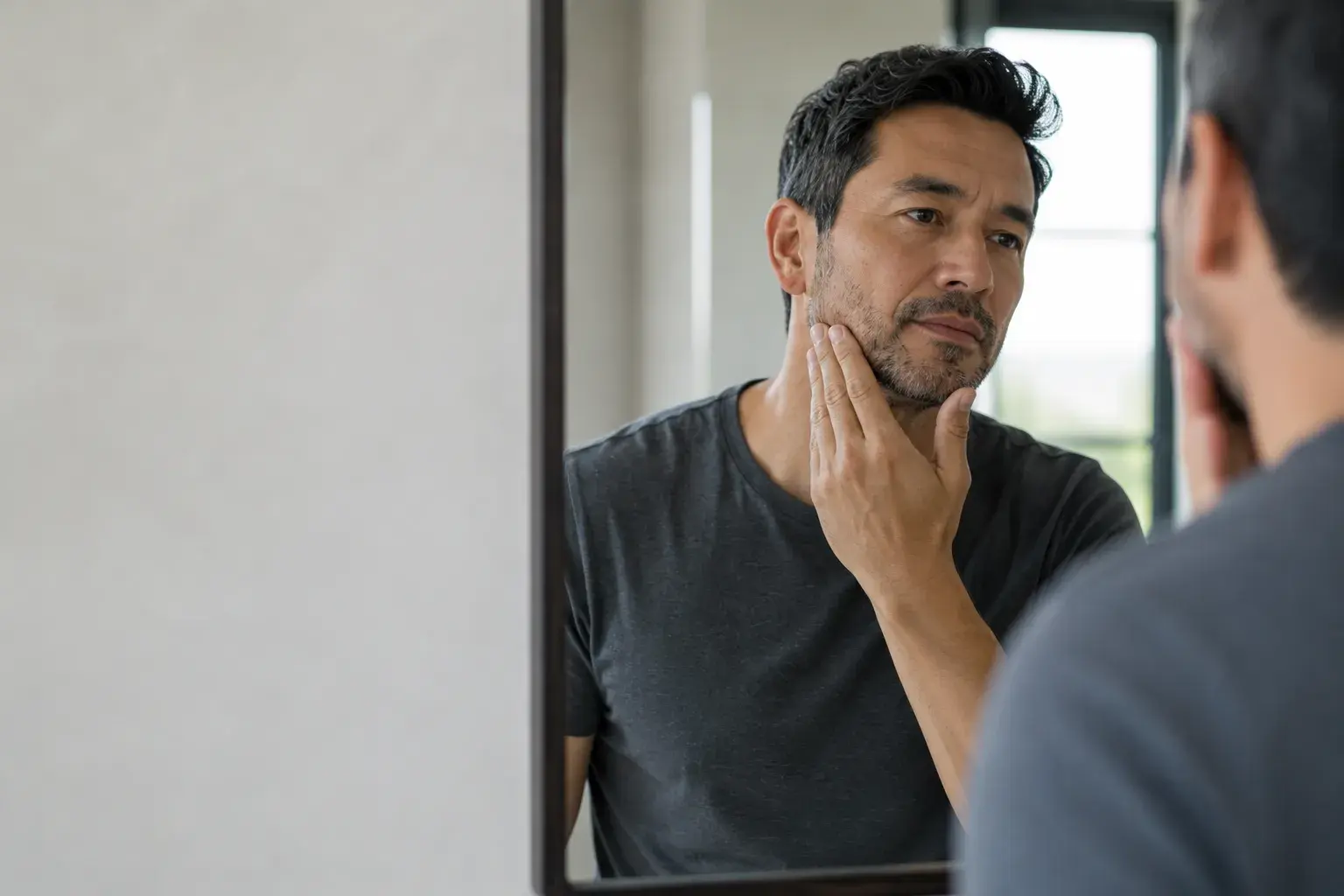
TRT can change how a man's face looks, though not in the way many people expect. It doesn't reshape adult bone structure. What testosterone replacement therapy can do is shift facial fat, affect skin thickness and oil production, and support facial hair growth in men with the genetics for it. The changes are real but gradual, building on existing features rather than creating a new face.
Does TRT change your face? In short: yes, but through fat redistribution, skin changes, and facial hair growth, not bone remodeling. Adult facial bone structure is fixed after puberty, so therapy works within those limits. Men who notice a difference typically see a leaner jawline and improved skin quality develop over several months to a year.
Testosterone naturally declines by about 1% per year starting in a man's 30s or 40s, and one widely cited study by Mulligan and colleagues found that 38.7% of men over 45 met criteria for hypogonadism. Facial appearance is just one of many areas treatment may affect alongside fatigue, low libido, and mood changes.


What Is the Science Behind Facial Changes on TRT?
Three biological systems drive how a face responds to testosterone therapy: bone structure, fat distribution, and skin quality.
Does TRT Change Bone Structure?
No. Adult facial bones are set by the time puberty ends. Androgen-driven bone growth happens during adolescence, while growth plates are still active. Once those plates close, the skeleton is locked in. TRT can support bone mineral density elsewhere in the body, but that's a different process from the jaw growth seen in teenagers.
How Does Testosterone Affect Facial Fat?
Testosterone plays a real role in where the body stores fat, including in the face. Low testosterone is associated with a softer fat pattern around the cheeks, jawline, and under the chin. As treatment restores levels to a normal range, some men notice a leaner distribution that makes the jawline appear more defined. This is fat redistribution, not fat loss from diet or exercise, though the two can compound each other.
Does TRT Affect Skin Thickness and Collagen?
Androgens interact with receptors in the skin that regulate collagen production and oil gland activity. Male skin is about 20% thicker than female skin on average, largely because of testosterone's influence on collagen density. Androgens increase both sebum output and skin thickness (Rahrovan et al., 2019). Some men notice firmer skin during treatment. Others notice more oil production and occasional breakouts. Both effects come from the same hormonal pathway.
How Does Your Face Change on TRT Over Time?
Facial changes on TRT tend to follow a loose timeline, though genetics, starting hormone levels, and dosage all affect the pace. Nothing here happens overnight.
1 to 3 Months: Early Signs
Skin often becomes oilier as sebaceous glands respond to rising testosterone, which can lead to mild acne in some men. Early fat redistribution may start reducing puffiness around the cheeks and chin. Patchy facial hair growth can begin here, but a fuller beard typically takes longer.
3 to 6 Months: Visible Progress
Fat redistribution often continues, bringing more definition to the jawline and cheeks. Some men report firmer muscle tone around the jaw and neck, along with improvements in skin evenness. Facial hair may thicken depending on genetics.
6 to 12 Months: More Defined Results
Many of the changes above become more pronounced. The face may look leaner and more angular as fat continues to redistribute, and facial hair patterns often fill in further. Skin thickness and texture may continue to change.
Beyond 1 Year: Maintenance
Most visible changes plateau after the first year. Continued treatment maintains these results. Stopping can allow some effects to reverse, which is why coming off TRT safely requires medical guidance rather than quitting cold.

How Do Facial Changes From TRT Differ by Age?
Age affects both the starting point and the pace of facial changes on TRT, since baseline hormone levels and skin elasticity shift over a man's life.
What Happens in Your 20s and 30s?
Testosterone levels are typically highest in early adulthood, supporting lean muscle, a defined jawline, and elastic skin. Men in this age range who start TRT usually do so only after confirmed low testosterone, since natural levels are usually still strong, and treatment requires careful screening.
What Happens in Your 30s to 50s?
Testosterone declines gradually through this stretch, which can bring subtle softening to facial contours and increased facial fat. This is the age range where hypogonadism becomes more common. Men here often notice the clearest difference in jawline definition and skin quality once treatment begins.
What Happens After 50?
Hormone levels tend to decline more sharply after 50, leading to more noticeable fat gain and softer facial contours. TRT may still improve fat distribution and skin quality, but changes generally develop more slowly than in younger men.
What Are Realistic Expectations for Facial Changes on TRT?
TRT works within existing features. It doesn't build a new face. Changes come from fat redistribution, muscle tone, and skin effects that reveal the bone structure already there.
Genetics also play a large role. Bone structure, fat distribution patterns, and androgen receptor sensitivity all shape the final result. Men concerned about hair loss on TRT should know that the same DHT driving beard growth can also affect scalp hair depending on genetics.
Therapeutic TRT restores levels to a normal physiological range and produces gradual changes over months. Higher, unsupervised doses carry additional health risks, which is one reason protocols weigh testosterone cypionate versus enanthate and other formulation choices carefully.
How Is TRT Monitored for Safety?
Regular lab work tracks how the body is responding and catches potential issues early, including some that affect the skin.
Diagnosis requires more than a single blood draw. The Endocrine Society's clinical practice guideline calls for two morning total testosterone readings below 300 ng/dL, combined with symptoms, before starting treatment (Bhasin et al., 2018).
Acne incidence on TRT ranges from about 0.6% to 10% depending on formulation, and oily skin is a frequent early complaint. These effects tend to respond well to dose or formulation changes, which is part of why some men do better on TRT cream versus injections. Hematocrit also needs regular monitoring, since testosterone therapy can raise red blood cell concentration.
Cardiovascular safety data has also evolved. The TRAVERSE trial, a randomized trial of 5,246 men with hypogonadism and cardiovascular risk factors, found major adverse cardiac events in 7.0% of men on testosterone versus 7.3% on placebo (hazard ratio 0.96, 95% CI 0.78 to 1.17) (Lincoff et al., 2023). Based on this data, the FDA updated TRT labeling to remove the cardiovascular boxed warning while adding a blood pressure warning (FDA, 2025). Providers also track estradiol alongside testosterone throughout treatment, since hormone ratios affect both symptoms and results.
Marek Health approaches testosterone therapy as treatment for a diagnosed condition, built around lab-confirmed deficiency and ongoing monitoring. Facial changes are a secondary effect, not the goal of therapy. Men curious about their levels can start with free and total testosterone testing before considering treatment.
Disclaimer: This blog post is intended for informational purposes only and should not be considered medical advice. Always consult a healthcare professional before making changes to your health routine.
FAQs
Does TRT change your face shape?
TRT can change the appearance of the face through fat redistribution, improved muscle tone, and skin changes, but it does not alter the underlying bone structure. Any change works within a man's existing facial framework rather than creating new bone contours.
How long does it take for TRT to change your face?
Early signs like oilier skin or minor fat shifts can appear within one to three months. More visible changes to jawline definition and skin quality tend to show up between three and twelve months, with results generally leveling off after about a year of consistent treatment.
Does testosterone make your jaw bigger?
Not in the sense of growing new bone. A jawline can look more defined on TRT because facial fat decreases and muscle tone improves, which reveals the bone structure that was already there rather than adding to it.
Can TRT make you look younger?
Some men report a more youthful appearance due to increased skin thickness, reduced facial puffiness, and better muscle tone. This isn't guaranteed and depends on genetics, baseline hormone levels, and overall health, so individual results vary widely.
Does TRT cause acne on the face?
It can. Acne is one of the more common side effects of testosterone therapy, with reported rates ranging from about 0.6% to 10% depending on the formulation used. Oily skin often accompanies it, especially in the first few months of treatment.
Will TRT help grow a beard?
It may, especially in men who already have some genetic capacity for facial hair growth. TRT tends to thicken and fill in existing facial hair patterns rather than create entirely new hair follicles in areas with none.
Do facial changes from TRT go away if treatment stops?
Some effects may gradually reverse after stopping treatment, since fat distribution and skin quality are tied to ongoing testosterone levels. This is one reason stopping therapy is typically approached gradually and under medical supervision rather than all at once.
References
More from Marek Health




Your biology has answers.
Custom labs, a dedicated care team, and treatment built on your biology, not guesswork. One program, built around you.
HIPAA compliant · We never sell your data