


Injections Vs. Enclomiphene For Low T: How To Choose
Injections vs. enclomiphene for low T: how each raises testosterone, what they mean for fertility, side effects, and FDA status. See a Marek Health provider.
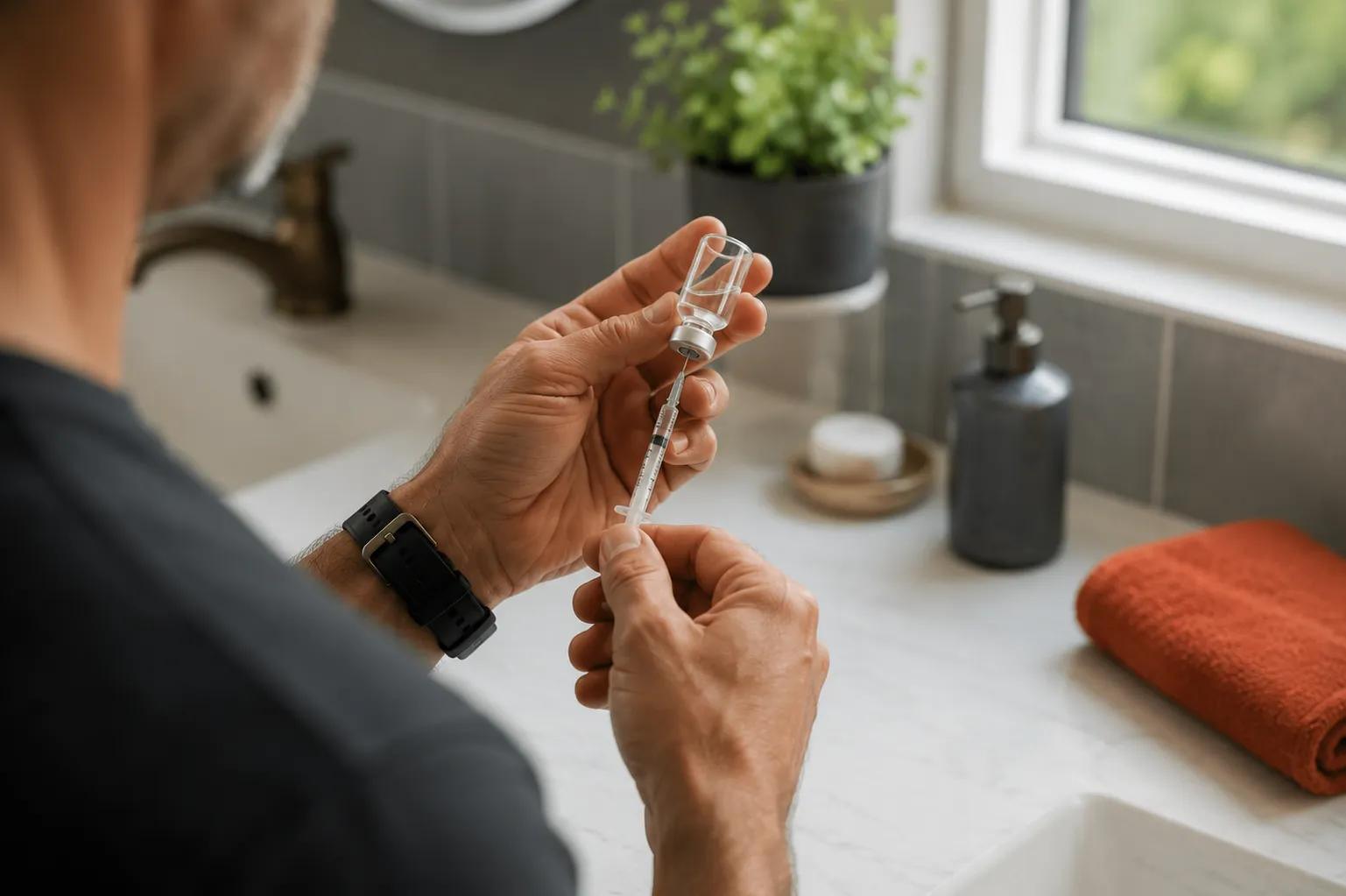
For men diagnosed with low testosterone, two prescription options come up most often: testosterone injections and enclomiphene. Injections vs. Enclomiphene for Low T is really a question of mechanism. Enclomiphene is an oral medication that signals the body to produce more of its own. One is replacement, the other is stimulation.
That difference matters, and so does which one a licensed clinician thinks fits your case. Marek Health approaches this as a direct-pay telehealth provider that bases the decision on lab work and clinical evaluation, not a fixed protocol. Injectable testosterone is FDA-approved for hypogonadism caused by a medical condition, not for low testosterone from aging alone. Enclomiphene is not approved at all, which shapes how the two compare.
This guide covers how each works, how well each raises testosterone, what they mean for fertility and side effects, and how providers weigh them. One rule applies throughout, including for anyone reading up on treating low testosterone: a low level alone is not a diagnosis. The American Urological Association defines testosterone deficiency as low testosterone on repeat morning testing together with symptoms (Mulhall et al., 2018).


What's the difference between testosterone injections and enclomiphene?
Testosterone injections replace the hormone directly, while enclomiphene prompts the body to make more of its own. Injectable testosterone, usually testosterone cypionate or enanthate, is a form of testosterone replacement therapy given by intramuscular or subcutaneous injection.
Enclomiphene is a selective estrogen receptor modulator (SERM). It is the trans isomer of clomiphene citrate, a medication FDA-approved only for female infertility, and its use in men is off-label (Rodriguez et al., 2016). Rather than adding testosterone, enclomiphene blocks estrogen receptors in the brain. That prompts the pituitary to release more luteinizing hormone (LH) and follicle-stimulating hormone (FSH), which signal the testes to produce more testosterone and sperm.
In practice, replacement raises testosterone directly but quiets the body's own production, while stimulation works through the body's existing signaling. That is why fertility and the split between primary and secondary hypogonadism often decide which approach a provider suggests.
How each option works in the body
A feedback loop controls testosterone. The hypothalamus releases gonadotropin-releasing hormone (GnRH), which tells the pituitary to release LH and FSH. LH drives the Leydig cells in the testes to make testosterone, and FSH supports the Sertoli cells that produce sperm. When testosterone rises, the brain slows those signals.
Injected testosterone adds to the circulating supply, so the brain reduces its own signals. LH and FSH fall, and the testes scale back testosterone and sperm production. Enclomiphene does the opposite. By blocking estrogen feedback, it raises LH and FSH, so the testes increase output (Wiehle et al., 2013).
How well does each raise testosterone?
Both can raise testosterone in appropriate patients, though suitability and response depend on the individual and provider evaluation. Injectable testosterone is a long-established replacement therapy, and the AUA discusses weekly injection schedules to limit the peaks and troughs of less frequent dosing (Mulhall et al., 2018).
Enclomiphene has a smaller and still-developing evidence base. In a randomized study of men with secondary hypogonadism, daily enclomiphene raised total testosterone and increased LH and FSH, while transdermal testosterone raised testosterone but lowered LH and FSH (Wiehle et al., 2013). A 2025 systematic review and meta-analysis reported that SERMs raised total testosterone compared with placebo while preserving fertility markers (Hohl et al., 2025). A small 2024 retrospective study reported enclomiphene produced testosterone gains similar to clomiphene, with fewer adverse events (Saffati et al., 2024).
| Feature | Testosterone injections | Enclomiphene |
|---|---|---|
| What it is | Injectable testosterone (cypionate, enanthate) | Oral SERM, trans isomer of clomiphene |
| How it works | Replaces testosterone from outside the body | Signals the body to make more of its own |
| FDA status for low testosterone | FDA-approved for hypogonadism from a medical condition (not aging alone) | Not FDA-approved, used off-label, compounded |
| Effect on LH and FSH | Suppresses them | Raises them |
| Effect on sperm production | Can lower sperm counts | Tends to maintain sperm counts |
| Typical use | Replacement when the testes cannot respond | Secondary hypogonadism, fertility a priority |


Effects on fertility and sperm production
This is where the two diverge most. Because injected testosterone suppresses LH and FSH, it lowers the signals the testes need to make sperm, and exogenous testosterone can reduce sperm production and fertility (Bhasin et al., 2018). How much, and whether sperm production recovers after stopping, varies between individuals and is not guaranteed.
Enclomiphene was studied because it can raise testosterone while largely preserving the fertility signaling that injected testosterone suppresses, though responses vary. By raising LH and FSH, it may help maintain spermatogenesis, which is why some providers consider it for younger men who want to protect fertility (Hohl et al., 2025). For men who want children while on therapy, options that preserve sperm production are part of the conversation, and a provider can match the approach to your fertility goals.
What are the side effects of injections and enclomiphene?
Both carry risks, and both call for monitoring under a provider. Testosterone injections can raise red blood cell concentration (erythrocytosis), which providers monitor and may manage with a dose change or phlebotomy (Bhasin et al., 2018). Other reported effects include acne, fluid retention, breast tenderness, a rise in estradiol as testosterone converts to estrogen, and worsening of sleep apnea. Estradiol and red blood cell counts are common reasons providers schedule follow-up labs, and estradiol monitoring is routine on replacement therapy.
Reported side effects of enclomiphene include headaches, hot flashes, nausea, mood changes, and a rise in estradiol (Rodriguez et al., 2016). A 2024 study found fewer adverse events with enclomiphene than with clomiphene, which is linked to more estrogenic effects (Saffati et al., 2024). Long-term safety data on enclomiphene remain limited.

What the TRAVERSE trial changed
TRAVERSE was the largest cardiovascular safety trial of testosterone therapy, and it mainly studied transdermal testosterone. Among men with hypogonadism and cardiovascular risk, those on testosterone had no greater rate of major adverse cardiac events than those on placebo, though the trial recorded more cases of atrial fibrillation and pulmonary embolism in the testosterone group (Lincoff et al., 2023).
In February 2025, the FDA applied the TRAVERSE results to all testosterone labels, including injectable products, removed the cardiovascular boxed warning, kept the Limitation of Use for age-related low testosterone, and added a warning about increased blood pressure (FDA, 2025). For men weighing treatment, that is one reason cardiovascular health factors in.

Is enclomiphene FDA-approved for low testosterone?
No. Enclomiphene is not FDA-approved for low testosterone and is used off-label (Rodriguez et al., 2016). It is dispensed as a compounded medication, and compounded drugs are not FDA-approved, nor does the agency verify them for safety, effectiveness, or quality. A branded enclomiphene product was studied but never approved by the FDA and is not marketed, so no standalone approved version exists.
Injectable testosterone stands on different footing. Testosterone cypionate and enanthate are FDA-approved for hypogonadism caused by a medical condition, not low testosterone from aging alone, and injection is one of several approved routes the FDA lists alongside gels, patches, and the buccal system (FDA, 2025). That does not make injections right for every man, but the two sit in different regulatory categories.
How do you choose between injections and enclomiphene for low T?
The decision rests on diagnosis, goals, and monitoring. A provider first looks at whether low testosterone is primary, from the testes themselves, or secondary, from reduced pituitary signaling. LH and FSH levels help make that call, and they sit alongside symptoms and the lab reference ranges that vary between labs. Recognizing the symptoms of low testosterone, such as fatigue and loss of muscle, is what prompts testing in the first place.
The AUA notes that clinicians may use SERMs, hCG, or aromatase inhibitors for men who want to preserve fertility, and prefers manufactured testosterone over compounded products when possible (Mulhall et al., 2018). The Endocrine Society recommends therapy for symptomatic men with confirmed low levels and advises against routine use for age-related decline alone (Bhasin et al., 2018). When low libido is the main concern, a provider checks several possible contributors, and comparing oral testosterone options adds useful context.
There is no universal winner in Injections vs. Enclomiphene for Low T. Injectable testosterone is the FDA-approved, well-studied choice for replacement, while enclomiphene is an off-label option some providers consider for secondary hypogonadism when preserving fertility matters. The right path depends on your diagnosis, goals, and monitoring. Testosterone is a Schedule III medication, so a prescription is required after evaluation, and access is limited to where state law permits.
Disclaimer: This blog post is intended for informational purposes only and should not be considered medical advice. Always consult a healthcare professional before making changes to your health routine.
FAQs
Is enclomiphene better than testosterone injections for low T?
Neither is universally better. Studies show both raise total testosterone in appropriate patients, but injectable testosterone is FDA-approved for hypogonadism from a medical condition while enclomiphene is used off-label. A 2025 meta-analysis found that SERMs like enclomiphene raised testosterone versus placebo while preserving fertility markers. The better option depends on your diagnosis, fertility goals, and provider evaluation.
Does enclomiphene preserve fertility better than testosterone injections?
In studies, yes. Enclomiphene raises LH and FSH and tends to maintain sperm production, while exogenous testosterone suppresses the body's own signaling and can lower sperm counts. Fertility effects vary between individuals and are not guaranteed, so anyone planning a family should discuss this with a provider.
Is enclomiphene FDA-approved for low testosterone?
No. Enclomiphene is not FDA-approved and is used off-label, dispensed as a compounded medication that the FDA does not verify for safety, effectiveness, or quality. By contrast, injectable testosterone is FDA-approved for men with hypogonadism from a medical condition.
What did the TRAVERSE trial find about testosterone and heart risk?
TRAVERSE, which mainly studied transdermal testosterone, found no greater rate of major adverse cardiac events than placebo, though it recorded more atrial fibrillation and pulmonary embolism in the testosterone group. The FDA applied these findings across all testosterone products in 2025, removing the cardiovascular boxed warning, adding a blood pressure warning, and keeping the Limitation of Use for age-related low testosterone.
How is low testosterone diagnosed?
Diagnosis requires a low testosterone level plus symptoms, not a number alone. The American Urological Association confirms low testosterone on repeat morning testing, with the exact cut-off set by the lab and your provider. LH and FSH levels help a provider tell primary from secondary hypogonadism.
How do you choose between injections and enclomiphene for low T?
The choice depends on your diagnosis, whether fertility is a goal, and how you and your provider plan to monitor treatment. Testosterone is a Schedule III medication, so a prescription is required after evaluation, and access is limited to where state law permits. Shared decision-making with a licensed clinician guides which option fits.
References
More from Marek Health




Your biology has answers.
Custom labs, a dedicated care team, and treatment built on your biology, not guesswork. One program, built around you.
HIPAA compliant · We never sell your data