


Normal Testosterone Levels By Age: A Reference Chart
Normal testosterone levels by age run 264-916 ng/dL for adult men. See the chart, what shifts after 30, and how to read your own result before testing.

For healthy adult men, normal testosterone levels by age sit between 264 and 916 ng/dL, with a median around 531 (Travison et al., 2017). ng/dL is short for nanograms per deciliter, the unit labs print on your results. Levels run highest in your late teens and 20s, then ease down a little each decade once you pass 30.
Most men are surprised by what comes next. There's no official "normal for your exact age" chart. Most U.S. labs apply one adult range and flag anything below it, whether you're 35 or 65.
The number on a lab report matters less than most people assume, and the symptoms matter more. A single low reading usually needs to be repeated and weighed alongside symptoms before any treatment decision, and good hormone health comes from reading labs and symptoms together.


What are normal testosterone levels by age?
Normal testosterone levels by age come down to life stage: child, teen, or adult. Your exact decade matters far less than people expect.
| Age or stage | Male (ng/dL) | Female (ng/dL) |
|---|---|---|
| Childhood (1-10) | 2.5-10 | 2.5-10 |
| Puberty (10-18) | 100-970 | 15-38 |
| Adults (19-39) | 264-916 (median 531) | Premenopausal: 10-55 |
| Adults 40 and up | Same 264-916 range; averages trend lower | Postmenopausal: 7-40 |
Adult male range and median: CDC-standardized data (Travison et al., 2017). Other ranges follow LabCorp reference intervals and vary by lab and assay.
The adult male range of 264 to 916 comes from a 2017 study that pooled four large groups of men and re-ran the samples through one standardized method at the CDC (Travison et al., 2017). It's CDC-standardized, and the Endocrine Society says clinicians can use it for certified assays in men aged 19 to 39 (Bhasin et al., 2018). Still, these figures are general references, not personal cutoffs, and only a provider can say what a given result means for you.
Now the part that frustrates anyone hunting for a tidy by-decade chart. As a rough guide, average testosterone by decade peaks in the 20s, often around 600 to 700, then drifts into the 400s and 500s by the 50s and 60s. Those are ballpark averages, not cutoffs. They move with the lab, the time of day, and the man in the chair.
Testosterone before you're born
Testosterone shows up early. Before birth, it directs how the male reproductive system forms. Without enough of it at the right moments, that development doesn't follow the typical path.
The peak years, from puberty to your 20s
Puberty is testosterone's loudest stretch. It deepens the voice, brings facial and body hair, and builds muscle. That's why the teen male range runs so wide, from roughly 100 to 970, since boys move through puberty at different speeds. Levels top out in the late teens and early 20s, hold near that peak for a while, then the slow slide starts.

What happens to testosterone after 30?
After about 30, testosterone starts a gradual decline. The figure repeated everywhere is a drop of roughly 1% a year. It's a handy rule of thumb, and it oversells aging as the cause.
Aging is only part of the story. For many men, weight gain and health problems like obesity can matter as much as age itself. In men carrying extra weight, losing weight and sleeping better may help, though how much varies from person to person. It's rarely just the years.
Women's testosterone runs its own course. It stays much lower through life and tends to drift down gradually with age.
Signs your testosterone might be low
Low testosterone in adult men is generally a total reading below 300 ng/dL on more than one morning test, the cutoff the AUA uses (Mulhall et al., 2018). The Endocrine Society draws its line a little lower, at 264 ng/dL (Bhasin et al., 2018). The number alone isn't the point, though. Plenty of men sit at 350 and feel terrible. Plenty sit at 280 and feel fine.
The symptoms that actually send men in for a test tend to be:
low sex drive
steady fatigue or flat energy
low mood or irritability
loss of muscle and strength
trouble concentrating
Poorer sleep and lower bone density can creep in too. All of it overlaps with stress, bad sleep, and a dozen other causes, which is why the full picture of low testosterone symptoms matters more than any single line on a lab sheet.
Testosterone in women
Women make testosterone too, just far less of it, and they rely on it for energy, mood, muscle, and bone health. A typical range runs about 10 to 55 ng/dL before menopause and 7 to 40 after (LabCorp).
Levels that climb too high can cause acne, unwanted hair growth, scalp hair loss, and irregular periods. A common cause is polycystic ovary syndrome, or PCOS, a hormone condition. Levels that fall too low can flatten energy, libido, and mood.

How is testosterone tested?
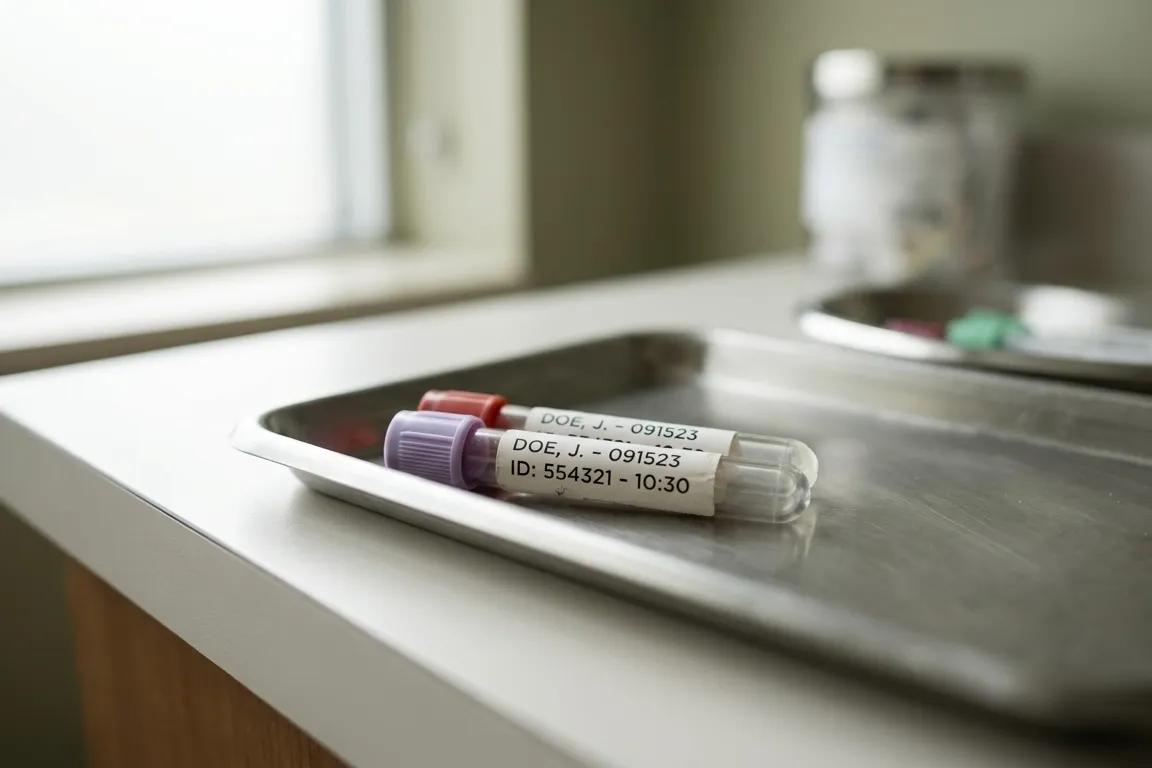
The standard test is a simple early-morning blood draw, when levels peak, which is also when the AUA recommends measuring it (Mulhall et al., 2018). A total testosterone test measures everything in your blood. But a good share of your testosterone is bound to a protein called SHBG and isn't usable, so a "normal" total can still hide low free testosterone.
That's the catch most men miss. One total number, drawn at the wrong time, can be misleading. Total testosterone is the main measure, but free testosterone and SHBG can add context when SHBG may be high or low, and a repeat morning draw helps confirm a result, which is why a single reading is weaker than a full hormone panel. At-home kits exist and can be a starting point, but their accuracy varies, so confirm anything surprising with a lab.
What pushes testosterone too high or too low
Low levels aren't always about aging. Obesity, thyroid problems, kidney or liver disease, heavy drinking, a testicle injury, some medications, and genetic conditions like Klinefelter syndrome can all pull testosterone down.
High levels have their own causes. In women, PCOS is the usual one. In men, it's often related to using anabolic steroids or other external testosterone. Tumors of the testicles or adrenal glands and a condition called congenital adrenal hyperplasia can raise levels too.
What to do about low or high testosterone
What happens next depends on the cause, the symptoms, and a provider's evaluation, not on one number. For mild cases, the unglamorous stuff helps: shedding excess weight, sleeping more, and training regularly may support healthier levels, though results vary from person to person.
For men with genuinely low levels and matching symptoms, one option is testosterone replacement therapy, available as injections, gels, a patch, and nasal gel. Whether to start it is an individual decision, made with a provider who weighs your symptoms, risks, and goals together. Here's the limit worth knowing. FDA-approved testosterone products are cleared only for low testosterone tied to a medical condition, not for aging by itself (FDA, 2025). In April 2026, the FDA took an early step toward studying one new use, low libido in men whose low testosterone has no clear cause, though nothing is approved yet (FDA, 2026).
Therapy carries trade-offs. A large trial found no rise in major cardiac events, though it was linked to higher rates of some problems such as irregular heartbeat and blood clots (Lincoff et al., 2023). After those findings, the 2025 FDA labeling update dropped the old heart-risk boxed warning and added a warning about raised blood pressure (FDA, 2025). It also needs monitoring, since it can thicken the blood, and younger men should weigh fertility first, because therapy can suppress it.
Take one thing from this. Normal testosterone levels by age are a range, not a target, and how you feel inside that range is the real signal. One low number, drawn at the wrong hour, is a reason to follow up with a provider, not to assume there's a problem or to ignore it. Get it confirmed, in the morning, more than once, with a provider who reads the whole picture.
Disclaimer: This blog post is intended for informational purposes only and should not be considered medical advice. Always consult a healthcare professional before making changes to your health routine.
FAQs
What are normal testosterone levels by age?
For healthy adult men, the standard reference range is 264 to 916 ng/dL, with a median near 531, based on CDC-standardized data from a 2017 study. Levels peak in the 20s and trend lower each decade after 30. Most labs apply this single adult range rather than a separate cutoff for each age.
What is considered low testosterone?
Low testosterone generally means a consistently low morning level, confirmed on more than one test, alongside matching symptoms. The exact cutoff varies between guidelines, and symptoms matter more than the number, since some men feel fine with low readings and others feel poorly even when their level looks normal.
Can you have symptoms of low testosterone with normal levels?
A total testosterone test counts hormone that's bound to the protein SHBG and not actually usable. Free testosterone can be low even when total looks normal. Sleep problems, stress, thyroid issues, and medications can also drive the same symptoms, so a normal total doesn't rule everything out.
Can you raise testosterone naturally instead of starting therapy?
For mild cases, often yes. Losing excess weight, improving sleep, and regular strength training may support healthier levels, and obesity is linked to lower testosterone. These steps are slower and less reliable for true clinical deficiency, where a provider's evaluation is the right call.
Does testosterone therapy raise heart or prostate risk?
In one large 2023 trial, therapy did not appear to raise major cardiac events in the men studied, though it was linked to higher rates of some problems such as irregular heartbeat and blood clots; the FDA removed the older heart-risk boxed warning in 2025 and added a blood-pressure warning. Therapy can also affect the prostate, so providers usually monitor prostate health during treatment and generally avoid it in men with active prostate cancer.
What's the difference between total and free testosterone?
Total testosterone measures all the hormone in your blood. Free testosterone measures only the portion not bound to proteins, which is the part your body can actually use. When SHBG runs high or low, free or bioavailable testosterone can give a clearer picture than the total alone.
Do normal testosterone levels by age differ for men and women?
Yes, substantially. Adult men typically fall between 264 and 916 ng/dL, while women run far lower, roughly 10 to 55 ng/dL before menopause and 7 to 40 after. Both sexes see levels decline with age, men gradually after 30 and women more around menopause.
References
More from Marek Health




Your biology has answers.
Custom labs, a dedicated care team, and treatment built on your biology, not guesswork. One program, built around you.
HIPAA compliant · We never sell your data