


TRT For Firefighters And Physical Fitness Standards
TRT for Firefighters: Learn how TRT may help firefighters with diagnosed low testosterone. Covers fitness standards, erythrocytosis risks, and current evidence.
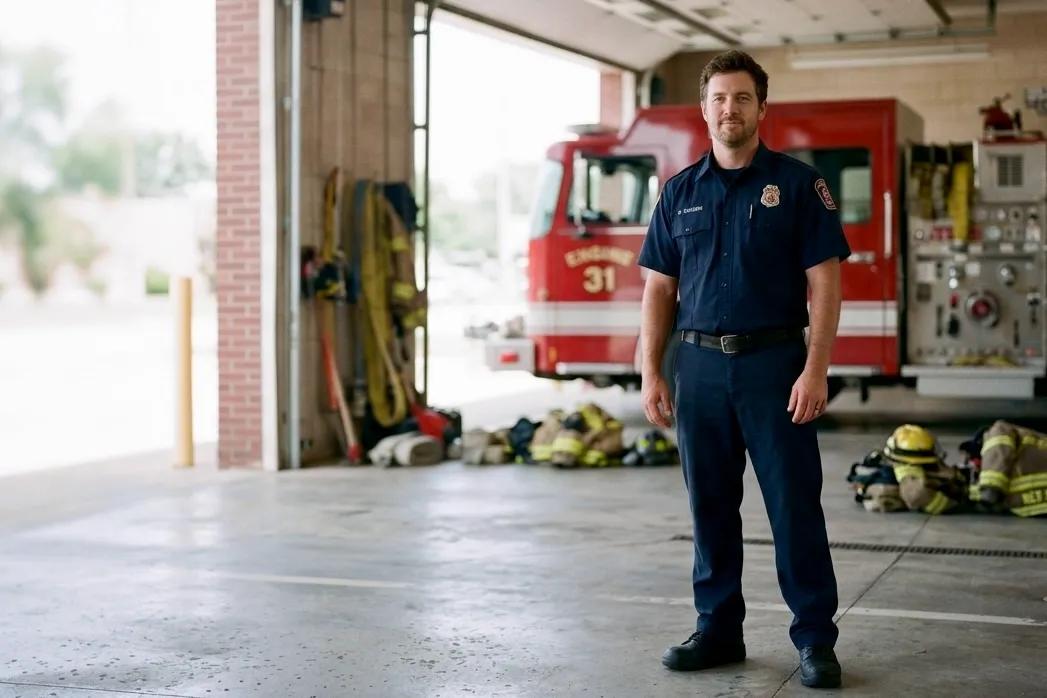
Firefighters depend on sustained physical readiness to perform rescues, carry heavy equipment, and work in extreme heat for hours at a time. When testosterone levels fall below the clinical threshold, that readiness can suffer. TRT for firefighters is a medically supervised hormone therapy option that may help address symptoms of diagnosed deficiency, including reduced strength and slower recovery, though outcomes depend on individual factors and the treatment carries risks that require careful monitoring.
A 2020 cross-sectional study of 341 career firefighters found that 10.6% had total testosterone below 264 ng/dL, and another 26.4% fell in the borderline range of 264-399 ng/dL (Lofrano-Porto et al., 2020). That combined 37% subnormal prevalence exceeds estimates in the general population and points to occupational factors, not just aging. For firefighters considering whether medical evaluation is the right next step, the decision starts with lab-confirmed diagnosis and an honest look at both the benefits and the risks.
Testosterone replacement therapy is FDA-approved only for men with hypogonadism caused by a medical condition, not for age-related decline alone. The American Urological Association defines the diagnostic cutoff as a total testosterone consistently below 300 ng/dL on two separate early-morning draws, combined with clinical symptoms (Mulhall et al., 2018). For firefighters, those symptoms often overlap with the effects of shift work itself, making accurate diagnosis especially important.


Why Are Firefighters at Higher Risk for Low Testosterone?
Firefighting creates a combination of hormonal stressors that few other professions match. Chronic sleep disruption from 24-hour shifts suppresses the hypothalamic-pituitary-gonadal axis, the hormonal pathway responsible for testosterone production. A 2021 study of 298 male firefighters found strong associations between low total testosterone and cardiometabolic risk factors, including a 78.1% prevalence of fatty liver disease in the low-testosterone group, with a fourfold higher adjusted odds of fatty liver independent of age and BMI (Ranadive et al., 2021).
Cortisol is part of the problem. Repeated physiological stress responses during emergency calls may contribute to cortisol dysregulation, which can interfere with normal testosterone production over time. Combined with irregular eating patterns, dehydration, and occupational exposures, the cumulative effect may contribute to hormonal decline beyond what population studies attribute to aging alone (roughly 1% per year, with wide individual variation).
Heat exposure adds another layer. Firefighters working in turnout gear and high-ambient-temperature environments face thermal stress known to impair spermatogenesis. Whether chronic occupational heat exposure also affects testosterone production from Leydig cells is less established. Unlike office workers or even other physically demanding occupations, firefighters experience these stressors simultaneously and repeatedly across a career spanning decades.
How Does Shift Work Affect Hormone Levels?
Rotating 24- and 48-hour shifts disrupt circadian rhythm, and testosterone production follows a circadian pattern with peak levels occurring between 7 and 10 AM. When sleep architecture is fragmented, that morning surge diminishes. A small study found that one week of sleep restriction (5 hours per night) reduced daytime testosterone by 10-15% in young men (Leproult & Van Cauter, 2011), and shift workers may accumulate similar deficits over time.
The Endocrine Society guideline specifies that blood draws for diagnosis should occur between 8 and 10 AM after adequate sleep (Bhasin et al., 2018). For firefighters coming off an overnight shift, a single lab draw may not reflect baseline levels. This is why the two-draw protocol, separated by 1-3 weeks, using the same lab and assay, matters even more in this population.
What Do Physical Fitness Standards Require of Firefighters?
Most fire departments mandate annual or biannual fitness assessments. The Candidate Physical Ability Test (CPAT) requires firefighters to complete eight events, including stair climbing with a 75-pound load, equipment carry, ladder raise, and rescue drag, all within 10 minutes and 20 seconds. Many departments also use the NFPA 1582 standard for medical fitness, which includes cardiovascular screening.
Testosterone plays a role in maintaining muscle mass and bone density, and may indirectly support aerobic capacity through its effects on body composition and red blood cell production. Men with diagnosed hypogonadism show measurable declines in lean body mass and grip strength. For a firefighter who needs to drag a 165-pound dummy, carry a charged hose line up stairs, or force entry through a door, those declines have professional consequences.
That said, TRT is not a shortcut to passing fitness standards. It is a treatment for a diagnosed deficiency that, when corrected, may help a firefighter maintain the physical baseline the job requires.

Does TRT Improve Physical Readiness in Men with Low Testosterone?
In men with confirmed hypogonadism, testosterone replacement has been associated with improvements in lean body mass, muscle strength, and body composition. The Endocrine Society guideline notes that testosterone therapy in hypogonadal men can increase lean mass and decrease fat mass (Bhasin et al., 2018).
Recovery between shifts is where many firefighters notice the impact of low testosterone most. Muscle protein synthesis, recovery capacity, and sleep quality are all influenced by androgen status, though testosterone is one factor among several. When a firefighter with documented hypogonadism is cleared for replacement therapy, the goal is to restore physiologic testosterone levels, which may improve recovery capacity in some patients, not to produce supraphysiological performance.
Individual responses vary. Some men report noticeable improvements in energy and strength within 6-8 weeks; for others, body composition changes take 3-6 months. The Endocrine Society recommends evaluating treatment response at 3 months and at 12 months, adjusting based on symptoms and lab values rather than chasing a specific number.
What Are the Cardiovascular Risks of TRT for Firefighters?
Cardiovascular disease has historically been the leading cause of on-duty firefighter fatalities, accounting for roughly 45% in pre-pandemic NFPA data. Any treatment that touches cardiovascular risk deserves scrutiny in this population.
The TRAVERSE trial, the largest randomized controlled trial of testosterone therapy to date, enrolled 5,204 men aged 45-80 with hypogonadism and preexisting or high cardiovascular risk. The primary MACE endpoint (death, heart attack, or stroke) occurred in 7.0% of the testosterone group versus 7.3% of placebo, meeting the noninferiority threshold (HR 0.96; 95% CI 0.78-1.17) (Lincoff et al., 2023).
That neutral primary result does not tell the full story. The testosterone group showed higher incidence of atrial fibrillation, acute kidney injury, and pulmonary embolism. For firefighters who work in dehydrating conditions while wearing heavy gear, pulmonary embolism risk is not a footnote.
Following the TRAVERSE data and ambulatory blood pressure monitoring studies, the FDA issued class-wide labeling changes in February 2025. The agency removed the previous cardiovascular boxed warning but added a new warning about blood pressure increases and retained the limitation-of-use statement excluding age-related decline (FDA, 2025).
Why Does Erythrocytosis Matter for Firefighters?
TRT commonly raises hematocrit, the percentage of blood volume occupied by red blood cells. Multiple clinical guidelines flag a hematocrit above 54% as a threshold requiring dose reduction or therapeutic phlebotomy (Bhasin et al., 2018; Mulhall et al., 2018).
For most men, mild erythrocytosis is manageable with monitoring. For firefighters, the risk profile is different. Working in extreme heat causes fluid loss and hemoconcentration, which pushes an already elevated hematocrit higher. Thicker blood in a dehydrated firefighter increases the risk of clotting events, stroke, and cardiac emergencies, precisely the scenarios the job makes more likely.
This is why monitoring hematocrit at 3-month intervals, and more often during summer months or after extended fire operations, is a baseline safety requirement for any firefighter on TRT.

What Monitoring Does TRT Require?
TRT is not a set-it-and-forget-it treatment. The Endocrine Society and AUA both recommend structured monitoring that includes total testosterone levels at 3 and 6 months post-initiation, hematocrit at baseline and every 3-6 months, PSA (prostate-specific antigen) at baseline, 3 months, and then per age-based screening guidelines, estradiol if symptoms of aromatization appear (breast tenderness, fluid retention), blood pressure checks at each follow-up per the 2025 FDA warning, and bone density assessment if indicated.
For firefighters, providers should also consider monitoring lipid panels and cardiovascular markers given the elevated occupational risk profile. Departments that include annual medical exams under NFPA 1582 already capture some of these values, which can be coordinated with the treating provider.
The AUA recommends a follow-up schedule of 3-6 months during the first year and annually afterward, assuming stable values (Mulhall et al., 2018). A firefighter whose hematocrit rises above 50% after a hot summer of fire suppression activity may need interim draws outside the standard schedule.


TRT Formulations: Which Delivery Methods Are Available?
| Formulation | Route | Dosing Frequency | Clinical Notes |
|---|---|---|---|
| Testosterone cypionate | Intramuscular or subcutaneous injection | Weekly to biweekly | Most common; predictable levels; requires injection skill |
| Testosterone enanthate | Intramuscular injection | Weekly to biweekly | Similar pharmacokinetics to cypionate |
| Transdermal gel | Applied to skin daily | Daily | Steady levels; risk of transfer to others through skin contact |
| Transdermal patch | Applied to skin | Daily | Less transfer risk than gel; skin irritation common |
| Testosterone undecanoate | Intramuscular injection | Every 10 weeks (after loading) | Less frequent dosing; must be administered in a clinical setting due to REMS |
| Oral testosterone undecanoate | Oral capsule | Twice daily with meals | FDA-approved 2019; requires fatty meal for absorption |
For firefighters, injectable testosterone cypionate remains the most commonly prescribed formulation due to cost, dosing flexibility, and the ability to self-administer. Transdermal gels carry a transfer risk that matters in firehouse environments where shared sleeping quarters and physical contact during training are routine.
Compounded testosterone products are available but are not FDA-approved. If a compounded formulation is used, the prescribing provider should disclose this distinction, including that compounded products are not subject to the same FDA manufacturing oversight as approved products.
Does TRT Affect Fertility?
Testosterone replacement suppresses the hypothalamic-pituitary-gonadal axis, reducing or eliminating sperm production in most men. This effect is variable, not guaranteed to be reversible, and depends on treatment duration, baseline fertility, and individual physiology.
The Endocrine Society recommends against prescribing exogenous testosterone in men who are actively trying to conceive (Bhasin et al., 2018). Alternatives for hypogonadal men seeking fertility preservation include clomiphene citrate (off-label) or hCG (human chorionic gonadotropin), both of which stimulate endogenous production rather than replacing it.
Firefighters in their 20s and 30s who are considering TRT should have a direct conversation with their provider about family planning before initiating therapy. Recovery of spermatogenesis after stopping TRT typically takes several months to a year or longer, and recovery timelines may be influenced by treatment duration and individual factors.

What About Drug Testing for Firefighters on TRT?
Standard workplace drug panels used by fire departments test for substances of abuse (amphetamines, opioids, cannabinoids, benzodiazepines, PCP). They do not screen for testosterone.
Testosterone is a Schedule III controlled substance under the Anabolic Steroid Control Act, which means a valid prescription and a legitimate medical purpose are required. A firefighter with a lawful prescription for TRT would not be expected to trigger a positive result on a standard workplace drug panel, which does not screen for testosterone.
That said, departments may have specific policies, and some athletic or competitive testing panels (such as those used in fire combat challenges) do screen for anabolic agents. Firefighters should review their department's policy and keep documentation of their prescription accessible.
How Does Lifestyle Affect Testosterone in Firefighters?
Before or alongside TRT, lifestyle factors play a measurable role in testosterone levels. These are not "natural boost" promises. They are evidence-based interventions that affect hormonal signaling.
Body composition is among the strongest modifiable factors influencing testosterone levels. Adipose tissue contains aromatase, the enzyme that converts testosterone to estradiol. Excess body fat drives that conversion, lowering free testosterone. Weight loss in overweight men has been associated with increases in testosterone, though the magnitude varies and may not be sufficient to resolve a diagnosed deficiency.
Resistance training stimulates testosterone production acutely and supports the lean mass that maintains it chronically. For firefighters, structured exercise programming that mirrors job demands (loaded carries, stair climbing, dragging) serves dual purposes.
Sleep hygiene within the constraints of shift work can partially mitigate circadian disruption. Blackout curtains, consistent pre-sleep routines, and limiting caffeine during overnight shifts can support sleep quality, which plays a role in hormonal regulation. Alcohol reduction also affects testosterone directly, as chronic consumption suppresses the HPG axis and increases aromatase activity.
These interventions don't replace TRT for men with confirmed hypogonadism, but they may support treatment response and overall health.
How Can Firefighters Get Evaluated for Low Testosterone?
The diagnostic process follows clinical guidelines and applies to firefighters the same way it applies to any patient, with a few occupational considerations.
Step one is symptom recognition. Reduced energy, declining strength, lower cognitive sharpness, mood changes, and decreased libido are the clinical symptoms associated with testosterone deficiency. These symptoms also overlap with burnout, depression, and sleep deprivation, which is why lab confirmation is required.
Step two is testing. Two separate early-morning blood draws (8-10 AM), ideally on days off shift and after a full night's sleep, measure total testosterone and free testosterone. Additional labs include LH, FSH, SHBG, prolactin, hematocrit, PSA, and a metabolic panel. A single low value is not diagnostic.
Step three is clinical evaluation. A licensed provider reviews labs plus symptoms and rules out other causes before considering treatment. For firefighters exploring whether TRT is appropriate, Marek Health offers telehealth evaluations with licensed clinicians who can order labs and prescribe when medically appropriate, where permitted by law.
Disclaimer: This blog post is intended for informational purposes only and should not be considered medical advice. Always consult a healthcare professional before making changes to your health routine.
FAQs
Is low testosterone more common in firefighters than the general population?
Research suggests it is. A study of 341 career firefighters found that 37% had subnormal testosterone levels, compared to lower estimates in age-matched general-population samples. Shift work, chronic stress, heat exposure, and irregular sleep patterns likely contribute to this higher prevalence.
Will TRT show up on a fire department drug test?
No. Standard workplace drug panels test for substances of abuse and do not screen for testosterone. A lawful prescription for TRT would not be expected to cause a positive result on a standard panel. Firefighters should keep prescription documentation on file with their department if required by policy.
How long does it take to notice changes after starting TRT?
Timelines vary by individual. Energy and mood improvements may appear within 4-8 weeks. Body composition changes, including increased lean mass and reduced fat mass, typically take 3-6 months. The Endocrine Society recommends a formal treatment evaluation at 3 months and again at 12 months.
Can firefighters use telehealth for TRT evaluation and prescribing?
Yes, under current federal telemedicine flexibilities extended through December 31, 2026, Schedule III substances like testosterone can be prescribed via telehealth without a prior in-person visit, subject to state law. Marek Health provides telehealth evaluation and prescribing where permitted.
Does TRT affect fertility in male firefighters?
Exogenous testosterone suppresses sperm production in most men. The effect is variable and not guaranteed reversible. Firefighters who plan to have children should discuss alternatives like clomiphene or hCG with their provider before starting TRT.
What is the biggest safety concern with TRT for firefighters specifically?
Erythrocytosis, the increase in red blood cell concentration, is the primary occupational concern. Firefighters working in hot environments lose fluid rapidly, which concentrates already-elevated red blood cells and raises clotting risk. Regular hematocrit monitoring, especially during high-heat seasons, is a requirement for safe TRT management in this population.
Is TRT FDA-approved for age-related testosterone decline?
No. The FDA limitation-of-use statement, retained in the February 2025 labeling update, specifies that testosterone products are approved only for men with low testosterone caused by certain medical conditions (hypogonadism), not for age-related decline alone.
References
More from Marek Health




Your biology has answers.
Custom labs, a dedicated care team, and treatment built on your biology, not guesswork. One program, built around you.
HIPAA compliant · We never sell your data